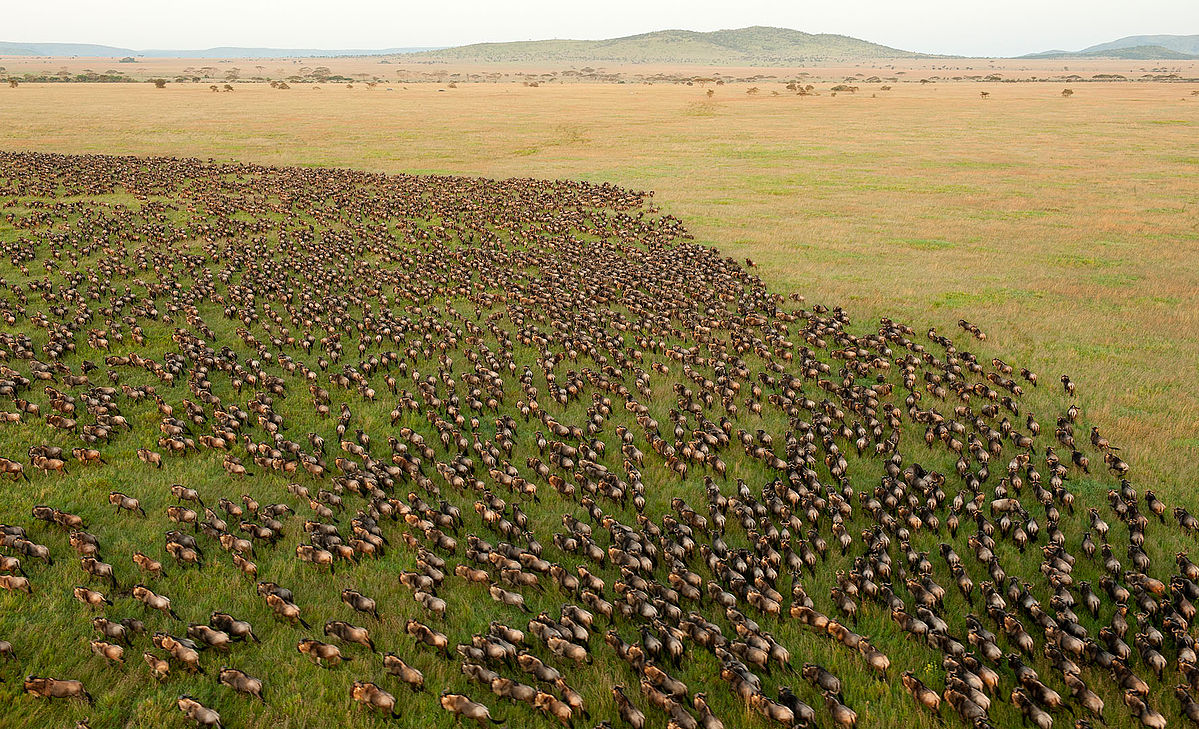
The endless grasslands of the Serengeti do not merely host a migration; they run on it. Driven by regional atmospheric shifts, hundreds of thousands of wildebeest and zebras move along an unceasing cyclical highway, creating one of the most powerful ecological engines on earth.
Rainfall Fronts and Nutrient Chemistry
The precise mechanics behind these herd shifts rely heavily on chemical signatures in the soil. When localized thunderstorms roll across the southern volcanic plains, they trigger rapid growth in nutrient-dense grasses. These plants pull vital phosphorus and nitrogen from the deep volcanic ash—minerals that are absolutely critical for pregnant and lactating herds. The animals track these rich nutrient blooms with astonishing precision.
"Soil core samples taken directly along the primary migration track show a 60% higher phosphorus concentration during peak herd grazing cycles compared to excluded monitoring blocks."
Altering Predatory Strategy
This massive movement of biomass forces resident carnivore groups into complex tactical adjustments. While large lion prides rely on holding their permanent territories, solo hunters like cheetahs and leopards must track the herd fringes opportunistically. As thousands of hooves break up the soil, they trigger localized insect and small rodent activity, creating secondary hunting grounds for smaller carnivores and raptors.