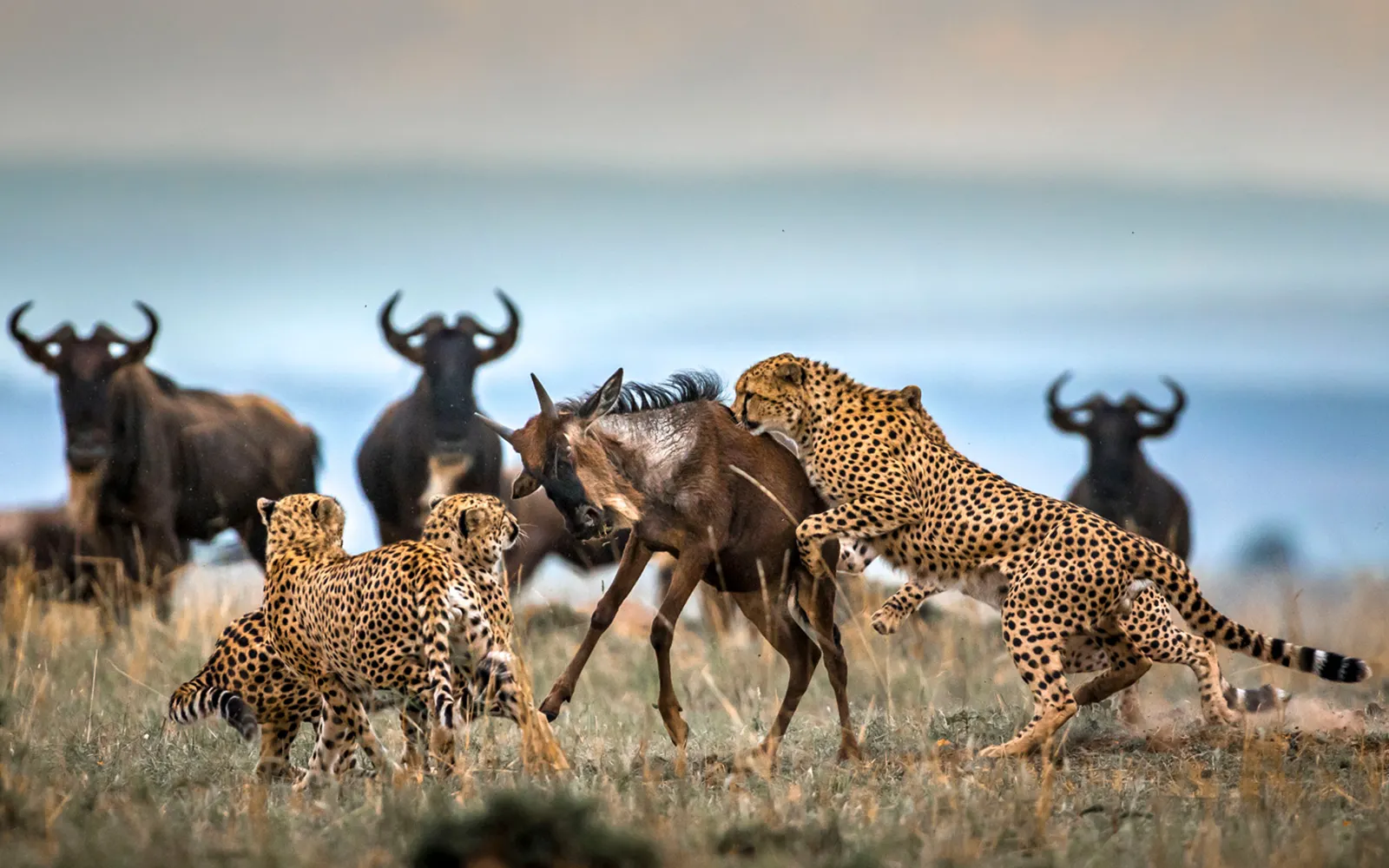
The endless plains of the Serengeti operate on a tight, uncompromising caloric timeline. As the heat haze clears off the horizons, the architectural spacing of the landscape transforms into a high-stakes chess board. For the region's apex predators, navigating this visibility threshold requires highly complex behavioral loops designed to map vulnerability.
Acceleration Architecture: The Cheetah Strategy
Unlike the collective hunting patterns of resident lion prides, the cheetah (Acinonyx jubatus) relies strictly on spatial isolation and burst kinetics. Telemetry tracking reveals that micro-topography—specifically termite mounds and eroded drainage lines—serves as critical staging platforms. By calculating the sight-lines of prey groups, individuals can creep into an operational strike zone without alerting nearby competition.
"Nocturnal thermal arrays showed resident prides modifying their perimeter boundaries by up to four kilometers to explicitly box out solo hunters operating along the woodland margins."
Nocturnal Pride Shifts
When daylight drops, the savannah transitions into an entirely different tactical theatre. Apex predator networks utilize the covering darkness to completely rearrange their territorial markers. Using thermal telemetry arrays, our conservation units observed complex cooperative ambushes where younger lionesses force herds toward hidden corridors where the heavy pride matriarchs wait.